
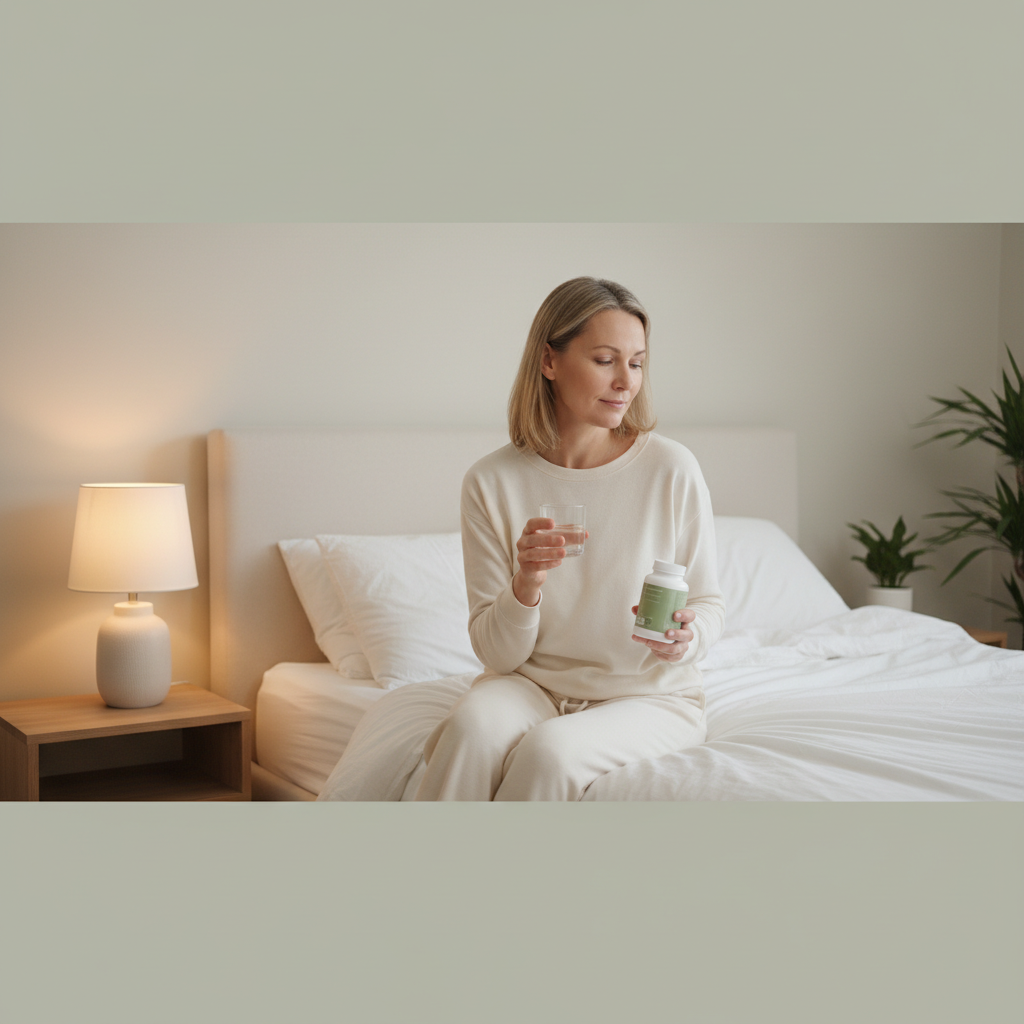
Menopause sleep problems are not a character flaw. They're a physiological event. Dropping estrogen and progesterone directly disrupt the body's temperature regulation, melatonin signaling, and GABA activity — the exact systems that control whether you fall asleep and stay there. If you're waking up at 3am, soaked through, or lying awake with a racing heart for no apparent reason, that's biology, not anxiety.
We spent time reviewing the clinical literature and testing formulations across a range of sleep supplements specifically relevant to the menopause transition. Most products in this category are fine. A few are genuinely useful. Here's how we sorted them.
How We Ranked These Supplements
Each supplement was evaluated on four criteria: quality of clinical evidence (not just one small study from 1997), bioavailability of the form used, absence of unnecessary fillers and additives, and value relative to cost. We also weighted supplements more heavily if they address multiple menopause symptoms simultaneously — because sleep during menopause rarely exists in isolation from hot flashes, anxiety, or cortisol dysregulation.
None of these replace a conversation with your doctor, especially if you're on SSRIs, blood pressure medication, or anticoagulants. More on that in the FAQ.
The Top Sleep Supplements for Menopause
1. Magnesium Glycinate — The Anchor
If you're only going to add one supplement during menopause, this is it. Magnesium is involved in over 300 enzymatic reactions, including GABA receptor activation and melatonin synthesis. Estrogen helps the body retain magnesium, so as estrogen drops, magnesium stores deplete — and sleep suffers as a direct result.
The glycinate form is key. Magnesium oxide (the cheap form in most drugstore supplements) has roughly 4% bioavailability. Magnesium glycinate absorbs significantly better and the glycine component adds its own calming effect at NMDA receptors. A 2012 randomized controlled trial in older adults found meaningful improvements in sleep onset time, sleep efficiency, and early-morning waking after magnesium supplementation.
Dose: 300–400mg elemental magnesium glycinate, 45–60 minutes before bed. Doctor's Best High Absorption Magnesium Glycinate (available on iHerb) uses the chelated Albion TRAACS form and consistently tests clean. We've covered magnesium for menopause in depth if you want the full picture on forms and dosing.
2. Passionflower — The Underrated One
Passionflower gets less attention than valerian, which is a mistake. The active compound, chrysin, binds to GABA-A receptors, producing a mild anxiolytic effect without the heavy sedation that makes some people feel groggy in the morning. A 2011 double-blind trial found passionflower tea improved subjective sleep quality scores compared to placebo — and the mechanism is solid enough that the effect makes pharmacological sense.
For menopause specifically, passionflower's anti-anxiety action is useful because sleep disruption in this phase is often anxiety-driven, not purely hormonal. Restless, churning thoughts at 2am respond better to passionflower than to melatonin. Nature's Way Passion Flower on iHerb is a clean standardized extract at a reasonable price point.
Dose: 200–400mg standardized extract (3.5% isovitexin), 30 minutes before bed.
3. L-Theanine — The Edge-Taker
L-theanine is an amino acid found in green tea that increases alpha brain wave activity — the same state you're in during relaxed, pre-sleep winding down. It doesn't knock you out. It removes the edge. If your sleep problem is specifically the inability to quiet a busy mind at bedtime, this is more targeted than most herbal options.
It stacks well with magnesium glycinate. Used together, they address both the physiological (GABA regulation) and cognitive (rumination, hyperarousal) components of menopause insomnia. Jarrow Formulas Theanine 200mg is a reliable option with no unnecessary additives.
Dose: 100–200mg, taken 30 minutes before bed. No dependency, no morning grogginess.
4. Valerian Root — The Classic, With Caveats
Valerian has more sleep studies behind it than almost anything in this category, but the research is genuinely mixed. Some well-designed trials show meaningful improvement in sleep latency and quality. Others show nothing. The variance likely comes from formulation inconsistency — valerian's active compounds (valerenic acid) degrade quickly and many products are under-standardized by the time they reach the shelf.
When it works, it works well. The effect is more sedative than passionflower, which some people prefer. But if you're sensitive to morning grogginess, start low. Also worth knowing: valerian can interact with sedative medications and alcohol more strongly than the other options on this list.
Dose: 300–600mg standardized extract (0.8% valerenic acid), 30–60 minutes before bed. Look for products that list valerenic acid content on the label. Nature's Answer Valerian Root on iHerb is alcohol-extracted and standardized.
5. Melatonin — Useful, But Probably Not What You Think
Most women going through menopause reach for melatonin first. The evidence for it is more nuanced than the marketing suggests. Melatonin works best for circadian rhythm disruption — jet lag, shift work, delayed sleep phase. For the hot-flash-driven night waking or anxiety-related sleep fragmentation typical in menopause, it's often not the right tool.
Where melatonin does help: shortening time to fall asleep initially, and in the very low doses (0.5mg) that more closely mimic natural secretion. Most products are 5–10mg, which is well above physiological range and can cause next-day grogginess or rebound insomnia. Life Extension Melatonin 300mcg on iHerb is the 0.3mg sublingual option that aligns with current low-dose research.
Comparison Table
| Supplement | Best For | Dose | Est. Cost/Mo | Watch Out For |
|---|---|---|---|---|
| Magnesium Glycinate | Overall sleep quality, night waking, muscle tension | 300–400mg | $12–18 | Loose stool at high doses; avoid oxide form |
| Passionflower | Anxiety-driven waking, racing mind at bedtime | 200–400mg extract | $8–14 | Mild sedation; check for drug interactions |
| L-Theanine | Busy-mind insomnia, general relaxation | 100–200mg | $10–16 | Very well tolerated; minimal interactions |
| Valerian Root | Difficulty falling asleep, mild to moderate insomnia | 300–600mg | $8–14 | Morning grogginess; avoid with sedatives/alcohol |
| Melatonin (low dose) | Sleep onset, circadian disruption | 0.3–0.5mg | $6–10 | High doses backfire; not for night waking |
Frequently Asked Questions
Can I take these with my antidepressant or blood pressure medication?
Valerian and passionflower both have mild CNS-depressant activity and can amplify the effects of sedative medications, benzodiazepines, and some antidepressants. Magnesium can affect the absorption of certain antibiotics and thyroid medications when taken simultaneously. Always space magnesium at least two hours from other medications and run any new supplement by your prescribing doctor — not because supplements are dangerous by default, but because interactions in this category are real and worth knowing about.
When should I take these?
Magnesium glycinate: 45–60 minutes before bed. Passionflower and valerian: 30–60 minutes before bed. L-theanine: 20–30 minutes before bed. Melatonin: 30 minutes before your target sleep time, not at your usual bedtime if you're trying to shift your schedule earlier.
How long before I notice a difference?
L-theanine and passionflower often show effects the same night. Magnesium glycinate typically builds over 1–2 weeks as tissue stores replenish. Valerian has the most variable onset — some people feel it immediately, others need 2–3 weeks of consistent use. Give any supplement at least 3–4 weeks before deciding it's not working.
Are these safe long-term?
Magnesium and L-theanine have strong long-term safety profiles. Passionflower and valerian have less long-term data but no significant concerns at normal doses. Melatonin at very low doses (0.3mg) is considered safe for ongoing use; high-dose melatonin long-term is less well studied.
What about hormone replacement therapy?
HRT remains the most effective intervention for menopausal sleep disruption when the primary driver is hormonal. Supplements work well as standalone options or alongside HRT. They're not competing approaches — many women find supplements fill the gaps even when HRT is helping.
The Bottom Line
If sleep is the problem, start with magnesium glycinate. It's the one supplement with the broadest evidence base, the clearest mechanism during menopause, and the lowest risk of interactions. Add passionflower or L-theanine if anxiety is the main obstacle. Save valerian for when you need something stronger and have ruled out medication interactions. Use melatonin strategically and at a dose that's actually physiological — 0.3mg, not 10mg.
And read the labels. The difference between a supplement that works and one that doesn't is almost always formulation quality, not the ingredient itself.
For more on navigating this phase, the perimenopause symptom guide covers what else might be going on with your body — and why magnesium glycinate specifically is worth understanding in depth.
This post contains affiliate links to iHerb. If you purchase through our links, we may earn a small commission at no extra cost to you. We only recommend products we've reviewed and believe are worth your money.